
 Menu
MenuFind out about "Alloy wheels"
Whilst many people view the wheels as a purely cosmetic addition to a car they actually have a profound impact of the handling. We shall look at the pros and cons of fitting alloy wheels to a car.
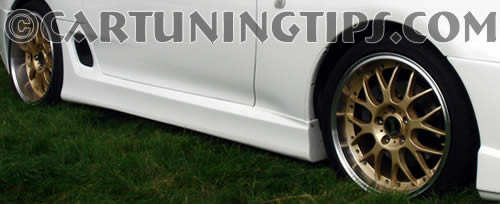
Steel wheels that come with cars tend to be quite heavy and are usually solid, save for a few holes cut in. Having something heavy spinning around takes more energy that something lighter. Also having a heavier unsprung mass means the car will be less predictable on rough surfaces.
The brakes main job are dissipating the heat. If they are housed in what is effectively a steel drum they will be unable to do this as effectively.
So alloy wheels or if we correctly name them, magnesium alloy wheels, are the potential solution. The alloys are generally lighter than their steel counterparts and allow larger air holes.
For most effective brake cooling go with a set that has a double row of holes around the outside of the wheel such as those produced for rally cars by OZ and compomotive.
Larger wheels will usually impair the drive and ride quality of the car so you should endeavour to maintain the same rotational diameter. If this diameter is larger then the speedo will under read so recalibration will be required. Problems of larger wheels include tram lining, poorer cornering and as the final drive ratio is altered the acceleration will also be worse.
One method to maintain the same rotational diameter would be to fit lower profile tires (we will look at these in another article) but they will help to reduce the circumference of the wheel back to OEM specifications.
Wider wheels are generally and incorrectly perceived to improve grip and cornering ability. In reality though the area of the contact patch remains the same. The size of the patch is governed by the pressure exerted on the tyre by the weight of the car and the gas pressure inside the tyre. A wider wheel may change the shape of the contact patch slightly but will not in itself give better grip! When you change the wheels you should always get the tracking, camber and toe reset to avoid premature tire wear.
Check out TorqueCars new YouTube channel, and see their awesome new content...
Feedback
Please use our forums if you wish to ask a tuning question, and please note we do not sell parts or services, we are just an online magazine.
Help us improve, leave a suggestion or tip