
 Menu
MenuTuners tips on "Engine Balancing and Blueprinting tips."
Think of an engine as a series of metal components moving at great speed changing direction frequently. The faster the speed of the engine the greater the vibration and forces encountered.
There is a limit to how fast and engine can goes safely, and manufacturers set this red line and include a Rev limiter.
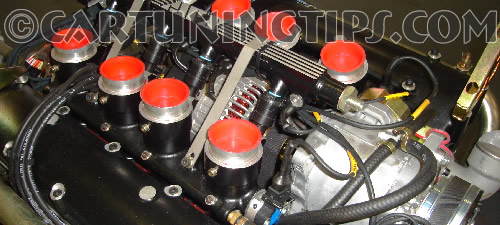 Disruptions, or vibrations, within the engine will sap power, and substantially reduce the life of the engine. To get more power from an engine each of the main dynamically moving components need to be balanced and precisely machined.
This will allow the upper Rev limit of the engine to be substantially increased. In the Formula one world the large engines are capable of revving to speeds of over 20,000 RPM. This is an indicator of how under tuned are stock engines are.
There are two parts to balancing an engine. The first is where the components are physically weighed and material added or taken away to ensure that they balance.
Typically this is performed on the pistons connecting rods and bolts. When these fast moving components have the same weight they will exert the same amount of forces at each parts of the engine cycle. This phase of engine balancing is often referred to as a blueprint stying where each component of the engine is exactly matched to the required specification.
All components are also checked for machining tolerances and the aim is to get all components as well matched as possible.
Where possible mass is also removed from the engine as lighter components are generally able to move at faster speeds and change direction more easily.
When an engine is in motion you need to take into account the dynamic forces generated.
So the second phase of engine balance requires specialist equipment where the engine components are assembled and monitored for dynamic imbalance. By balancing your engine you will benefit from more power, better economy, longer engine life and a higher red line.
The higher the revs the greater the power produced, on the basis that the engine is using more air and more fuel per minute. Peak power also tends to arrive on most engines part way through the rev band and many engines are just getting into their potential stride as the rev limit approaches.
Check out TorqueCars new YouTube channel, and see their awesome new content...
Feedback
Please use our forums if you wish to ask a tuning question, and please note we do not sell parts or services, we are just an online magazine.
Help us improve, leave a suggestion or tip